
Shelbyville City Directory Shelves
Historical Shelbyville directory research is spread among the Tennessee State Library and Archives, the Shelbyville-Bedford County Public Library, Bedford County Archives, Library of Congress material, and catalog leads. The strongest confirmed modern runs are the Polk publications listed by the TSLA Bedford County fact sheet. They are useful starting points, not proof of a continuous annual collection or of a reverse section. Keep the publisher and the edition year with every note, because a regional book, telephone guide, census publication, and city directory answer different questions.
| Collection | Years | Where Held | Access |
|---|---|---|---|
| South Central Tennessee Regional Polk City Directory | 1999 | TSLA Bedford holdings | Alphabetical run; confirm shelf availability and address section. |
| Coffee/Franklin/Bedford Polk City Directory | 2004-07; 2009-15 | TSLA Bedford holdings | Alphabetical run; verify each physical year and any reverse portion. |
| Shelbyville city directory catalog lead | 1879-80 | Geneanet catalog | Locate and inspect the scan or microfilm before relying on its layout. |
| Tennessee telephone/exchange directory | 1895 | Library of Congress, HE8841.N25 | Regional volume that includes Shelbyville; not complete household coverage. |
| Bedford census publications | 1820, 1850, 1880 transcription | TSLA publications | Household and residence-place clues to pair with directory years. |
TSLA also lists marriages, cemetery and obituary volumes, county court material, WPA family work, and other Bedford publications. Those titles are collection leads, so a reading-room or catalog check is still needed before assuming a particular name, page, or time span is included.
Shelbyville Polk Directory Runs
The TSLA Bedford County fact sheet identifies R.L. Polk & Co.'s 1999 South Central Tennessee Regional Polk City Directory for Bedford, Lincoln, Marshall, and Moore Counties. It separately identifies Coffee/Franklin/Bedford Tennessee Polk City Directory runs for 2004 through 2007 and 2009 through 2015. Each is described as alphabetical. The sources do not establish whether all intermediate years survived locally, whether a volume includes a criss-cross section, or whether Shelbyville entries are address-indexed.
The Shelbyville-Bedford County Public Library resource list links researchers to TennesseeGenWeb, TSLA, census material, Library of Congress resources, Bedford County Archives, and local newspaper routes. Ask about directories, yearbooks, obituary indexes, newspaper microfilm, vertical files, and any on-site genealogy databases. The library web page does not publish a shelf-by-shelf directory inventory, which makes a staff or catalog check important before a trip.
The library's genealogy resource page is a useful entry point for Shelbyville city directory companion sources.
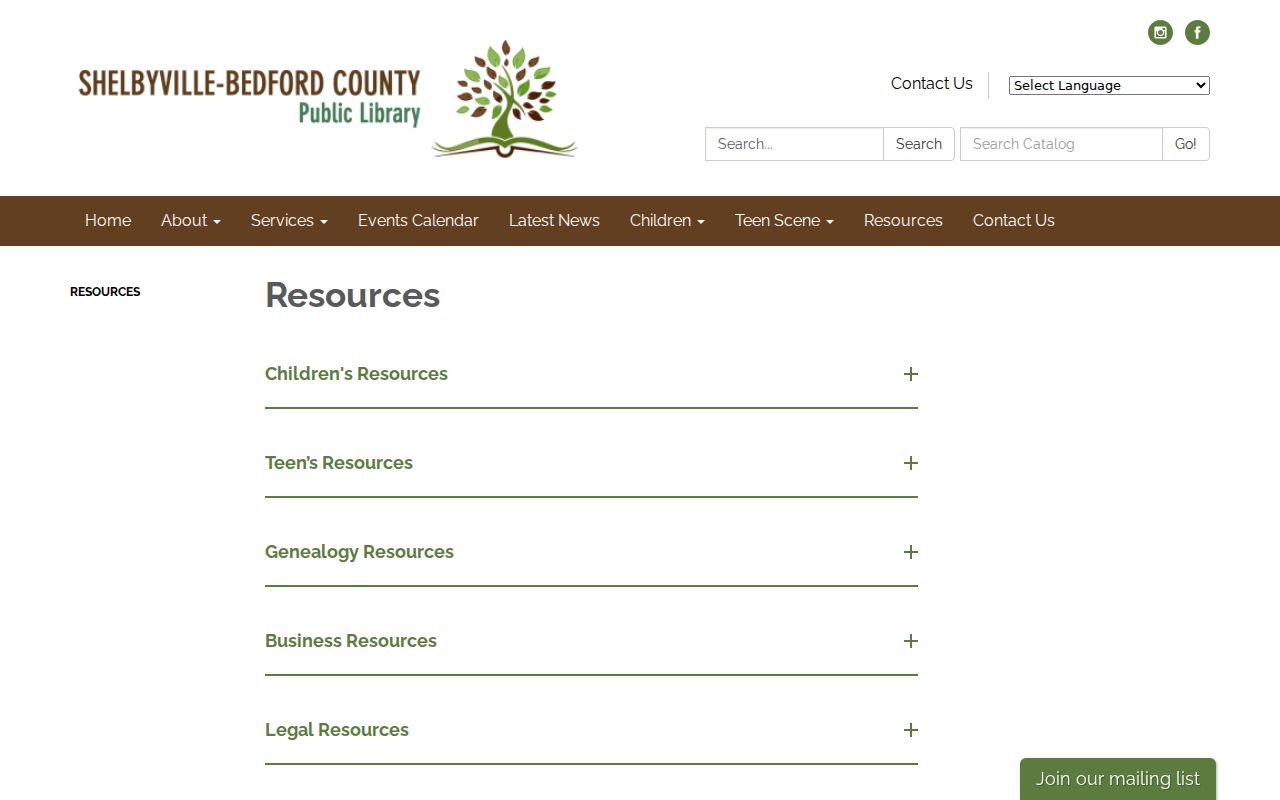
Library links can lead to a supporting census, cemetery, newspaper, or archive record when a Polk name cannot be confirmed in the expected edition.
Note: The known Polk lists establish useful runs, but they do not establish a complete annual Shelbyville city directory shelf.
Shelbyville Early Directory Leads
A catalog entry at Geneanet identifies “Shelbyville city directory - 1879-80.” It is a promising early lead, but the inspected catalog did not provide a readable local page, publisher statement, abbreviation key, or field order. Treat it as a locator record. The next step is to inspect the scan or microfilm and record exactly what the volume says about its publisher, city coverage, year, page, and cross-references.
The 1879-80 Shelbyville directory catalog record documents the title without confirming the contents of an entry.
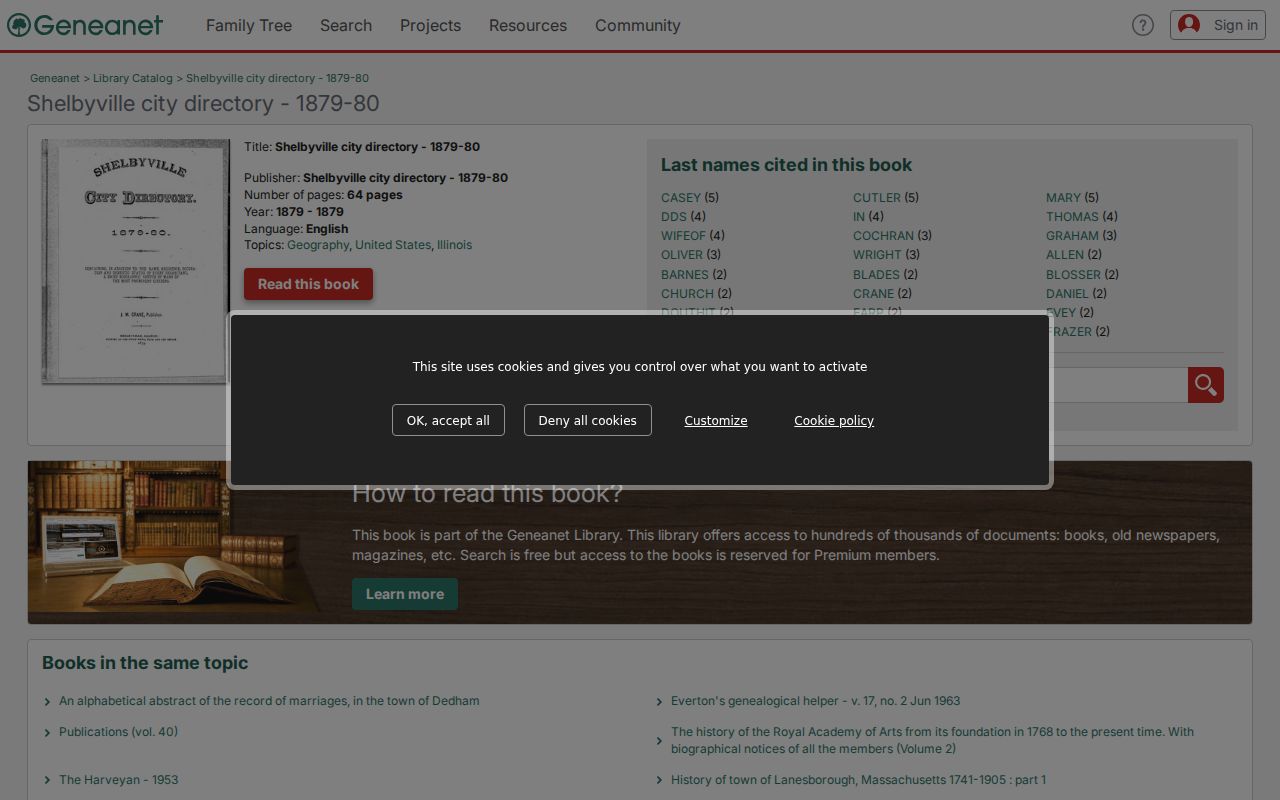
The catalog is best used to request, locate, or inspect the volume, not to infer an address, spouse, occupation, or telephone field that has not been viewed.
The Library of Congress also identifies an 1895 Nashville telephone/exchange directory that includes Shelbyville with several Tennessee cities. That regional telephone item is not the same thing as a complete Shelbyville city directory. It may help locate a business or exchange-era name, then needs to be paired with census, deed, newspaper, or cemetery evidence.
Reading Shelbyville City Directory Entries
No directly readable local entry was available in the inspected sources. For that reason, the inventory below is a cautious inspection checklist, not a claim about how every Shelbyville city directory is arranged. Photograph or transcribe the title page and the abbreviation key first. Then capture the entry exactly as printed, along with its year and page. A small punctuation mark or initial can separate two people with the same surname.
| Name | Record the surname, given name, initials, suffixes, and spelling exactly as printed. |
|---|---|
| Household notation | Note any spouse, widow, parenthetical, or household wording only if the inspected entry shows it. |
| Address line | Preserve the house number, street form, rural route, business location, or cross-reference as printed. |
| Telephone or occupation | Record these only when present, together with the directory year and page. |
| Symbols and cross-references | Copy the key, owner or occupancy mark, and address-to-surname behavior after inspecting the volume. |
- Criss-cross directory
- A street-order section that can lead from an address to a listed name. Its presence in a Shelbyville volume remains unconfirmed.
- Householder index
- An index that groups or points to household heads. It is not automatically included in every directory.
- Abbreviation key
- The printed explanation for shortened street, relationship, or occupational terms. It gives symbols their context.
Do not turn a common convention from another city into a Shelbyville fact. The local scan or its repository copy supplies the dependable answer.
Tracing Shelbyville City Directory Households
A household trail gains strength when it moves one edition at a time. Start with a modern assessor address only as a bridge, then normalize street suffixes and retain the parcel ID, legal description, and map position. Search the newest available Polk or telephone volume by surname and, where the inspected volume allows it, by street or address. Record every spelling change, initial, household change, and page reference. A disappearance can mean a move, death, different listing practice, or a missed entry.
- Find the earliest confirmed appearance in a specific directory or telephone edition and save the full citation.
- Move forward or backward one available edition at a time, preserving address wording and every name variant.
- Compare the address with the parcel's legal description and historic map position when street names or numbers seem different.
- Pair the directory observation with the closest public federal census year, especially 1920, 1930, 1940, or 1950.
- Use an obituary, cemetery, probate, marriage, or deed source to test why the person drops from the next available volume.
Federal census timing and directory publication timing can differ. Census residence may also use a district or rural description instead of a current postal label. Later schedules remain closed under the federal 72-year rule, while 1950 is public. TSLA's 1820, 1850, and 1880 Bedford publications provide earlier comparison points.
Shelbyville Maps Behind Directories
Historic maps can explain a directory address without pretending to name an occupant. The 1878 Bedford County map includes a Shelbyville inset and business index. The 1891 Sanborn map has five sheets. Together they show streets, building footprints, materials, uses, and business context in the historic core. Save the sheet and map date, then compare the location with a plat or deed description rather than estimating a modern parcel from the image.
Bedford County's record history also matters. A tornado in 1830 and courthouse fires in 1863 and 1934 shaped what survives. TSLA's WPA General Index to Deeds for 1808-1840 and the Burned Deed Index for 1852-1861 are reconstruction paths, not substitutes for an original deed. This local history explains why a catalog or index gap should lead to Archives, court minutes, tax records, plats, or newspapers.
Note: A historic map places a building or street in context, but it does not prove a particular household lived there.
Shelbyville Cemetery Directory Endpoints
When a name vanishes from a directory run, burial and obituary resources can supply an endpoint for family history. Willow Mount Cemetery provides a local interment route and city history. The city describes a cemetery established in the mid-1840s, more than 55 acres, and more than 30,000 interments. TSLA and Bedford County Archives also list cemetery, tombstone, funeral, and obituary publications that can support a careful cross-check.
A burial date or obituary is not proof of the last residence. Compare it with a dated directory, census, probate file, deed, or newspaper notice. The Library of Congress catalog for the Shelbyville Times-Gazette begins in 1948 and gives a route for notices, estate material, and obituaries. Preserve the issue date and page or clipping identifier for any newspaper finding.
Shelbyville Archives and Directory Gaps
Tennessee Virtual Archive is one of several digital routes linked from the local library. It sits beside TSLA, local Archives, Library of Congress collections, newspapers, and cemetery resources rather than replacing them. Bedford County Archives maintains a research room and lists county court, Chancery, Circuit, guardianship, settlement, marriage, deed-related, cemetery, funeral, obituary, and newspaper sources. A repository can confirm whether a printed volume, microfilm, index, or original file is available.
The Tennessee Virtual Archive portal offers a digitized collection route for Shelbyville city directory companion research.
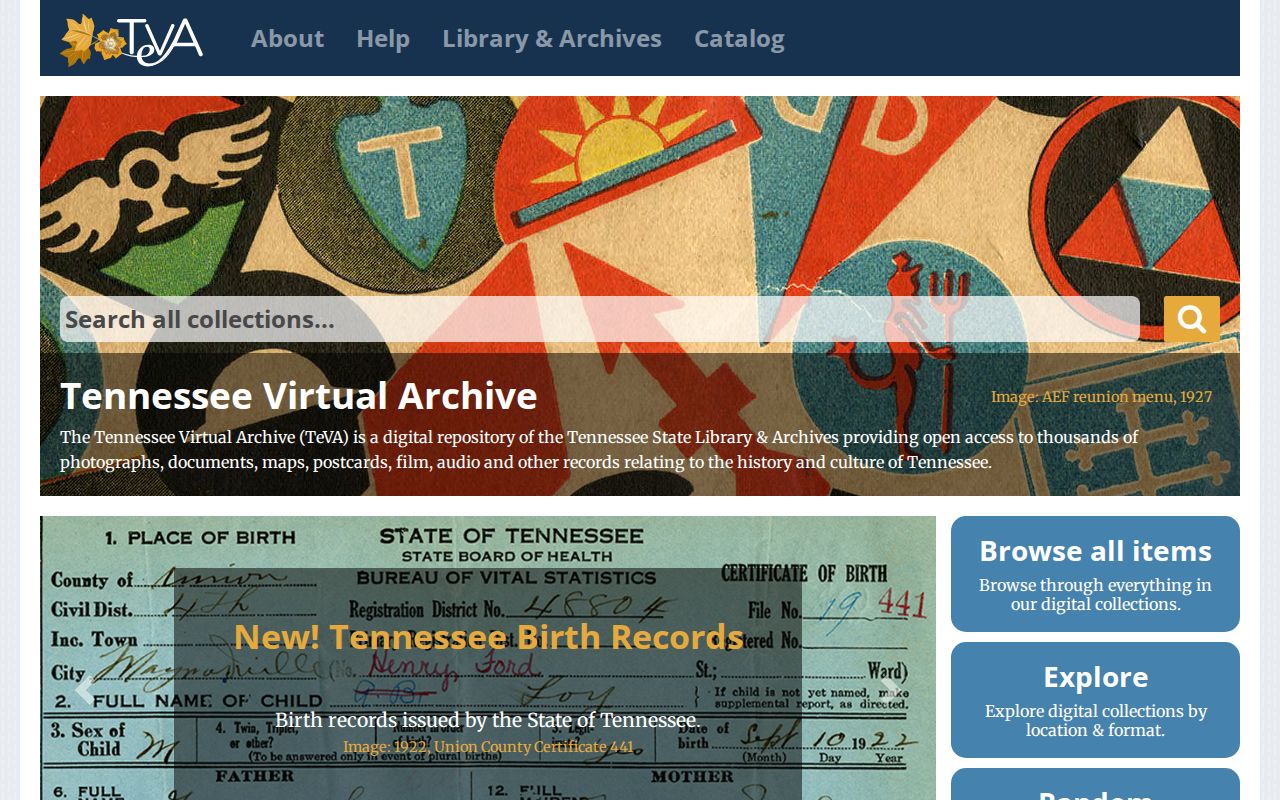
Digitized catalog access can speed discovery, but the source record still needs its repository, collection title, year, and page noted before it is used as family evidence.
For an earlier household, TSLA's Bedford list also points to 1820 and 1850 census publications, an 1880 transcription, Bible and tombstone projects, New Hope Lutheran records for 1805-1836, official marriage volumes, and county court series. These sources can extend a directory trail, but each has its own coverage and index limits. A catalog or reading-room check should confirm the item before a researcher assumes a name is present.
Continuous annual city directories, exact missing shelf years, local reverse-directory coverage, the first printed directory, and the final printed year were not confirmed. Keep those as open questions for the library or TSLA. A missing indexed name is not proof that no local record once existed, particularly where a source survived only as a reconstruction or a separate court, church, map, or newspaper series.